
On the Air
An interview with Martin Heslop and Helen Tookey

Out now from Longbarrow Press: To the End of the Land, a text and audio collaboration between Martin Heslop and Helen Tookey, grounded in the landscapes of Nova Scotia. This interview (conducted by Longbarrow Press editor Brian Lewis) took place in June 2025.
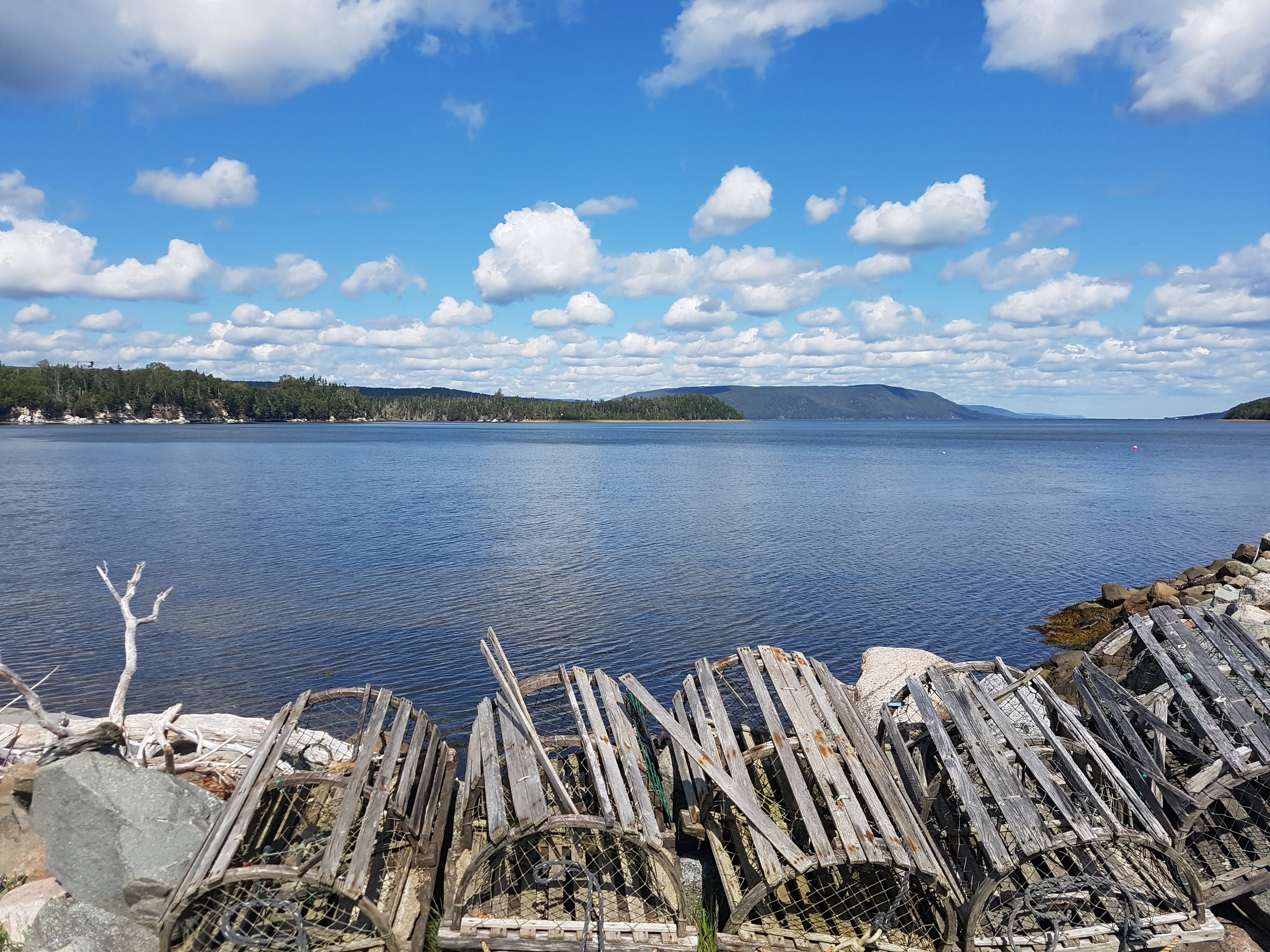
BRIAN: To the End of the Land developed from a short residency at the Elizabeth Bishop house in Nova Scotia. How did the residency come about, and had you worked together before?
HELEN: I happened to spot a call-out for the residency on Twitter. The Elizabeth Bishop Society of Nova Scotia offered an annual two-week residency in the house, which belonged to Bishop’s maternal grandparents and was where she’d lived as a child.
MARTIN: I remember applying a bit on a whim because we’d both written and thought quite a bit about Bishop’s work, and then being really surprised when we got it – like, ‘Oh shit, that means we’re going to Canada!’
HELEN: Martin and I had worked together a little bit before - he’d made fantastic audio tracks from some of my poems – but we hadn’t made anything from scratch together, so it seemed like a brilliant opportunity for that. I also thought that if we applied jointly, saying we’d like to make a work that involved sound as well as text, our application might stand out more – which I think it did.
BRIAN: What was it about this landscape – or landscapes – that invited a collaborative and creative response? Did you set out with particular outcomes in mind, and did these objectives change as the work developed?
MARTIN: I’d loved Cape Breton fiddle and piano music (particularly the brilliant Jerry Holland) when I was young and learning the fiddle myself, and I’d read a lot about the transatlantic migration of Scottish people during the Highland Clearances, so Nova Scotia was a place that I’d always wanted to visit. I also knew that the industrial history of the place was very similar to where I’m from in the north-east of England: coal-mining, shipbuilding, fishing. I’d just started a project over here recording the sounds of former industrial areas, so I’d planned to listen for similar traits that I was noticing in the post-industrial sound environments here: gaps/missing sounds; the reclamation of space by wildlife; the sonic richness of edge-lands; whether there existed some kind of sonic nostalgia for lost industrial sounds.
HELEN: I’ve just looked back at our original application, to see what we said we were going to do! The starting point for me, definitely (perhaps this was a bit different for Martin?) was Elizabeth Bishop’s own writing about Nova Scotia and more specifically about Great Village and the house. In the application, we said we might weave some of Bishop’s writing into what we made; I think, before we went, I was imagining that’s how we might proceed – or maybe even thinking that’s somehow what we ‘ought’ to do, because it was a residency in her house. But we didn’t do that. Once we got there, we both just started responding directly to what was around us – how we experienced the house, and then how we experienced the bay, the wider landscape. I worked in the same way that I always do: I wrote a lot in my notebook, just recording what struck me, how things looked, felt; and then started shaping what I’d written into poems.
One thing that seemed to come immediately was the voice, the sense of a person finding herself (somehow) in these places that she doesn’t know at all, trying to make sense of them. And the feeling of being somehow displaced in time – maybe it’s the past, maybe it’s the future, maybe there isn’t anyone else there, we don’t know why. That came from how things felt to me: this old wooden house with its tiny narrow wooden staircase, the sense of past presences; walking across miles of red rocks and sand at Economy Bay, no one else there, just all these ghosts of trees, torn up by the tides and storms. Just opposite the Elizabeth Bishop House there’s a church, and it was being used as a kind of overspill for an antiques shop – it was crammed with all kinds of random objects, old electronics equipment, furniture, spinning wheels… it was an absolute gift, poetically. (And that’s also where Martin found the draegerman kit, which inspired his whole side of the narrative, the character he created.)
MARTIN: Yes, it became much more narrative-based once I’d imagined the Draggerman character. But it was a story that was driven and guided by what we were experiencing – the places we were exploring, but primarily, for me, the sounds we were hearing. One of the places we found ourselves in was up in the hills where there were all these different crickets and other insects clicking and clacking and fizzing and buzzing out these different, overlapping rhythms (you can hear lots of these on the recordings). All these communications flying around us: messages that we couldn’t interpret. In the text, the Draggerman – as a consequence of grief/loss – doesn’t understand anything he’s hearing anymore, everything seems to be in a kind of code, and he’s trying to find some way of translating the sounds and voices that he’s hearing as a path through the grief he’s suffering. This was a direct response to these insects we were constantly hearing. Also, the whole physical journey of the text from place to place corresponded to the journey Helen and I took from Bishop’s House in Great Village to Glace Bay at the edge of Cape Breton Island – literally the end of the land.
HELEN: We responded as well to the unpredictable things that happened – like the storm. Because we weren’t looking at the news or anything, we had no idea there was a massive tropical storm on the way, until Sandra Barry (an Elizabeth Bishop expert, whom we’d arranged to meet up with) warned us that it wasn’t going to be safe to travel around. The storm was crazy – it knocked all the power out for days, completely changed the river, etc – and it obviously found its way into the work, in both words and sounds.
It was Martin who had a stronger sense of the histories, especially the industrial histories, of Nova Scotia – the shipbuilding, the coal-mining. So that side of it, the digging down into those layers, came originally more from him, and when that was meshed up against what I was writing it gave it a different dimension, made it much deeper and richer.
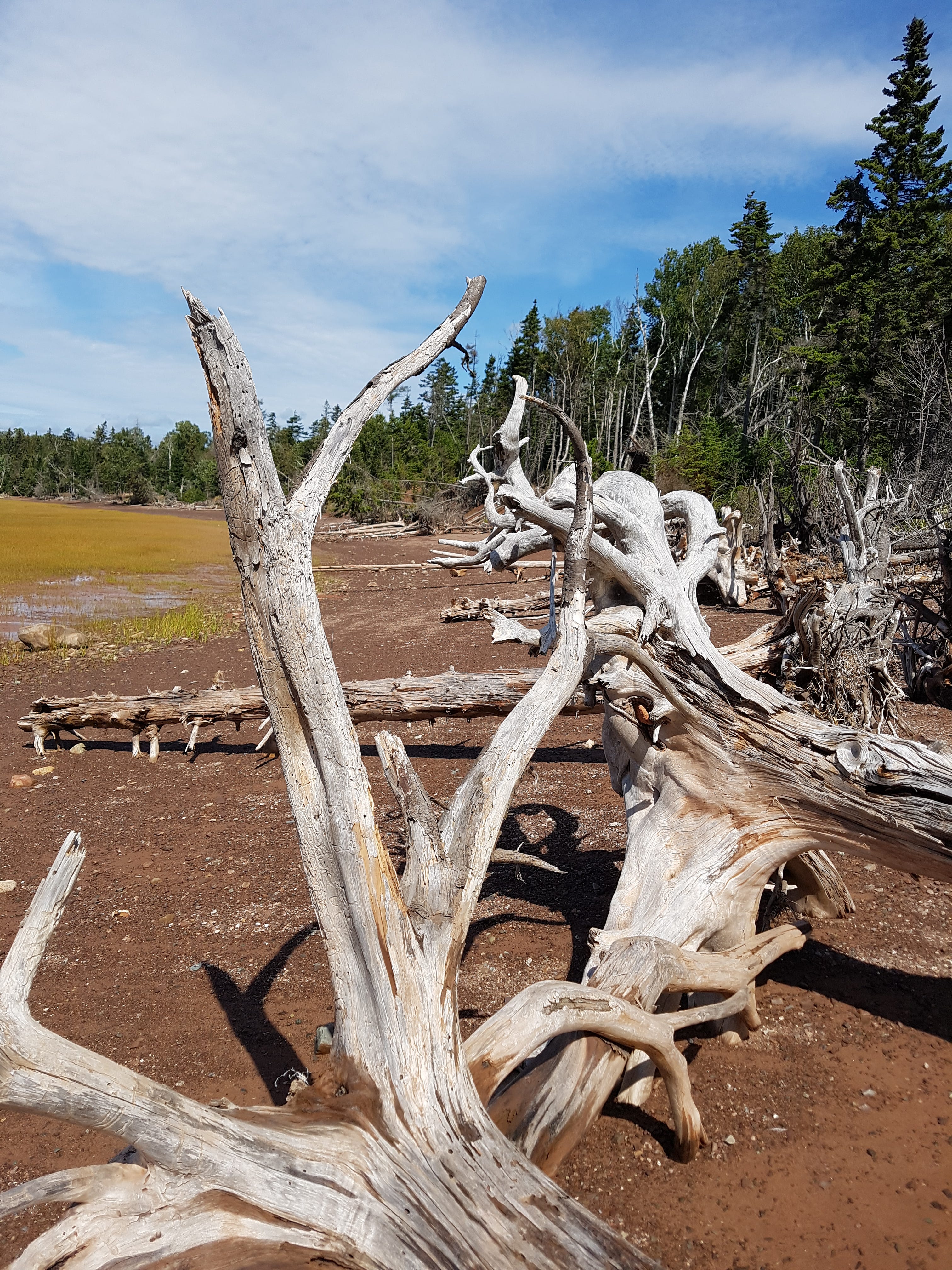
BRIAN: To the End of the Land comprises poems, photographs and audio works, with both of you gathering and developing sounds, images and texts during and after the residency. Did you find that your roles expanded or changed through this process?
HELEN: I think we might have started with the idea that I would do the writing and Martin would do the sound side of things, but neither of us wanted to be restricted by that. Martin found that he wanted to write, as well, and I really wanted to have as much input as I could into developing the sounds. Martin was definitely the sound-gatherer – I loved watching him do that. As soon as we went into the house for the first time he was standing in the rooms, clicking his fingers, listening to the echoes. And he was the one who built up the tracks – I don’t know how to do any of that. But I really enjoyed listening to them as he was building them, and trying to articulate what I thought, in a very non-technical idiom, like ‘I think it needs more space in it’, or ‘Can you make it sort of glitchier?’ I actually found that really interesting, and it’s something we’ve talked about quite a lot – that business of trying to find a language (a non-technical language) to describe the effects, or affects, of sounds.
MARTIN: I think it was natural that we both gathered everything that we could when we were there and I realised quite quickly that I wanted to write in response to the places we were visiting. And, yes, Helen’s input to the compositions was invaluable. As we were developing the work – both in Nova Scotia, and once we’d got back home - I sent ideas, little sections of compositions to Helen before I went too far into things. We had some very long email discussions about the ways to describe what something should sound like, and how sound – or feel, or tone, or timbre, or something (all those musical ‘things’!) – is very difficult to describe in English. We don’t have the language for sonic description – most of our metaphors that we use day-to-day are visual ones. So the conversations got very descriptive in strange ways – which was great in itself!
HELEN: I think the part that I found quite challenging was when we later started weaving what we’d both written into a kind of narrative, so we had to start thinking about questions like who are these two characters, why are they there, are they aware of each other, are they actually ever in the same reality, etc. Almost more novelistic sort of questions. As a poet, I’d never really had to think about those kinds of things – I had no idea who my ‘character’ was or why she was there! So that was interesting and challenging – to get the right balance between things making just enough sense, but not over-explaining.
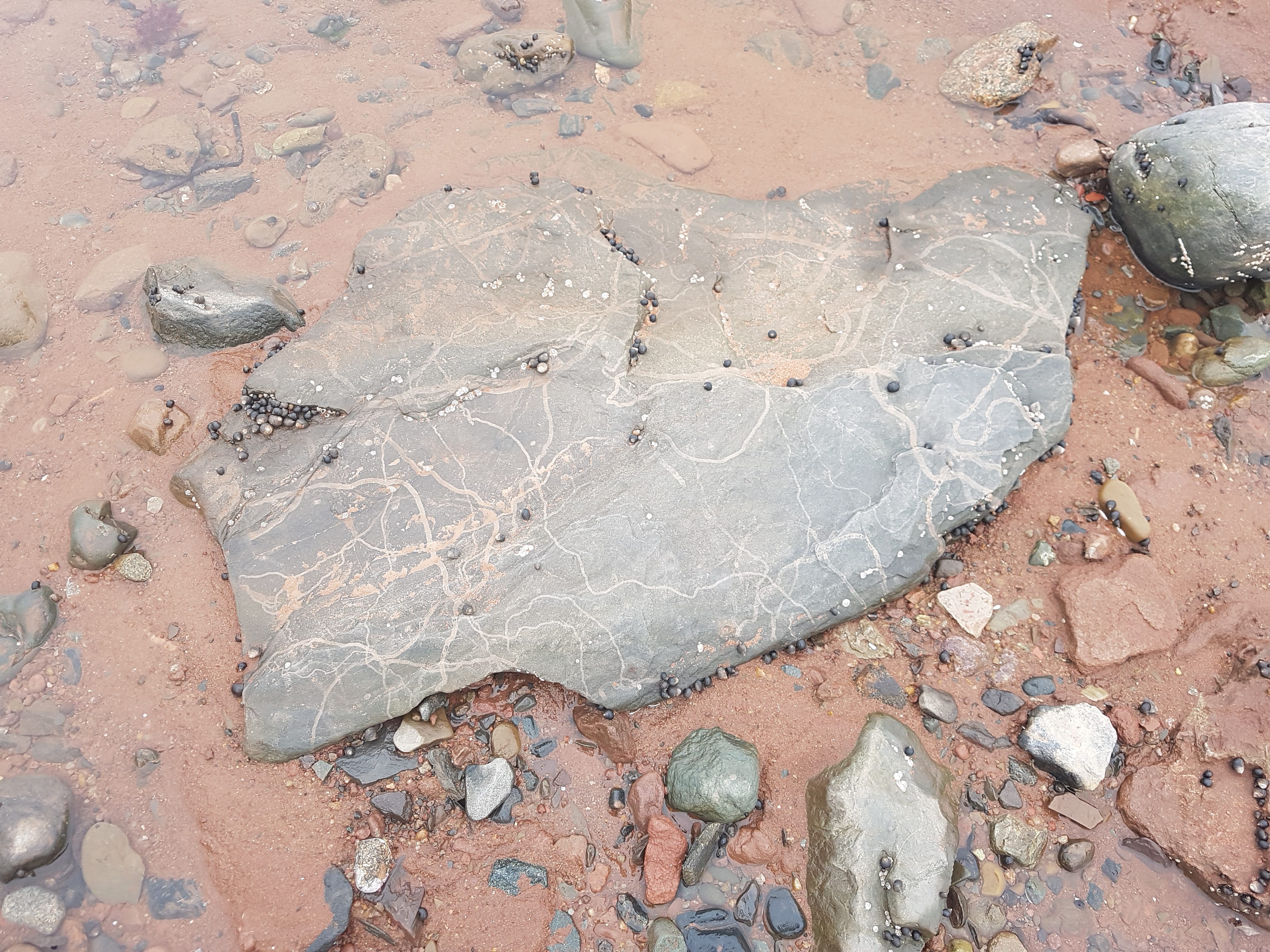
BRIAN: The poems are informed by the cultural and historical research – or reclamation – enabled by the residency, but are never dominated by it. The 'findings' – the saltflowers, the shattered quartz – are personal, and contingent (and, at times, suggestive of shared secrets). This lightness and intimacy, in the ear and on the page, is made possible by the discrete voices in the work (through which other, older voices often speak). Could you say a little about the process of 'voicing' the land, its people, and its objects, and your experiences in the archives at Cape Breton?
HELEN: I guess my response to that would be simply that I think poems (or any writing, really) have to be driven by real observation, real details, and never by ideas (although obviously the ideas are in there, under the surface). You have to make the findings (that’s a really nice way to put it), and allow them to shape the pieces of writing. So for example the mysterious metal object full of bits of quartz that’s described in the last poem is something that I found on the beach at Glace Bay, up in Cape Breton (the real end of the land). I still have no idea what it is – people have tried to tell me what they think it is but I don’t let them, because I want it to retain its mystery for me. But then because Martin was really intrigued by the fact that Marconi had made test transmissions from Glace Bay, and that whole idea of radio and voices on the air was finding its way into what he was writing – and quartz is used in radios, or used to be – that enabled the idea of this object as a kind of listening or speaking device, the idea of holding it up and listening, and it all fitted together. But none of that would have been possible if I hadn’t found the object itself, just by chance, on the beach.
MARTIN: Yes, I suppose the historical and cultural stuff was always there bubbling under, but I was just following the sounds and the settings we found ourselves in. Getting in touch with Jane Arnold at The Beaton Institute at Cape Breton University was amazing, because she allowed us to use wonderful old recordings of Gaelic songs by some of the most renowned Nova Scotian singers and musicians. There is a brilliant sort of scratchy, worn texture to these recordings, and being able to weave these through our own contemporary recordings added temporal layers and depth to the work.
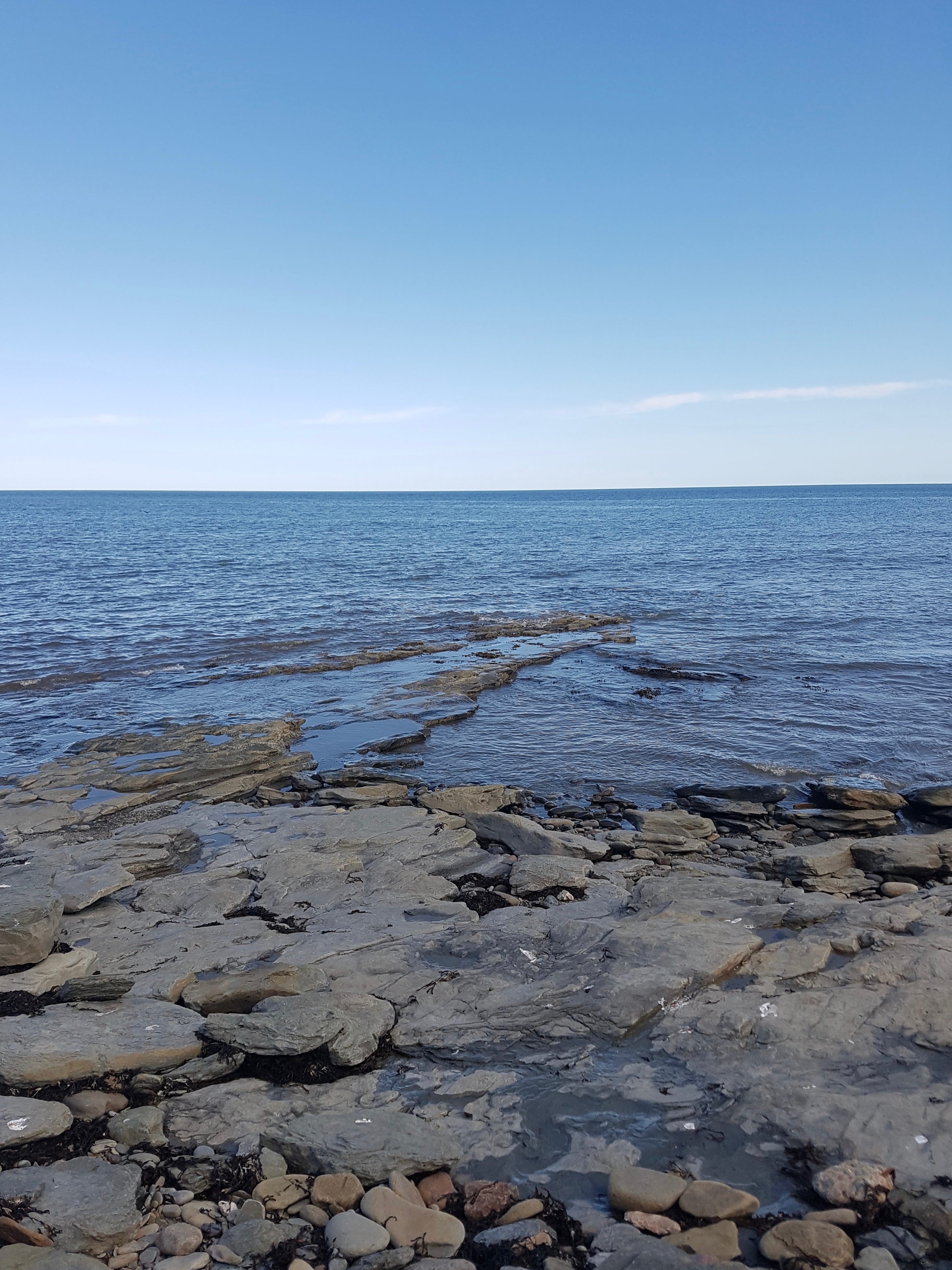
BRIAN: Finally, you've also spoken of the connections between Nova Scotia, Anglesey, and coastal Northumberland/County Durham, as post-industrial landscapes. What have you learned from reading one place through another?
MARTIN: Clearly there are parallels between the two areas – industrial decline, high levels of poverty and so on – but really these are big, complicated issues that, given we were only there for two weeks, couldn’t be the main focus of our work. Also, the cultural histories of the places are so different that I’m not sure that it’s really possible to read one place through another in this way. There’s a strange dichotomy in Nova Scotia in that a lot – not all, by any means, but a lot – of the Scottish and Irish settlers were forced migrants, cleared off their land by rich landowners. But, at the same time, they were colonisers, colonising the land of the Mi’kmaq people. These are complex, and evolving, histories that we just don’t have in the north-east. I’ve actually been exploring these things since we visited in a project with The Eccles Centre at the British Library, looking at the migration of sounds to Atlantic Canada during the 18th and 19th century, and the affect that this changing soundscape had.
HELEN: The link that I made was with Parys Mountain on Anglesey – a really extraordinary landscape of old open-cast copper mines, with heaps of differently coloured rock everywhere (because of the different minerals and metals in it), like a landscape from another planet. I wrote a prose-poem about Parys Mountain (it’s in my Carcanet collection In the Quaker Hotel), and again it uses the same kind of voice, speaking as though from a deserted future but remembering the past. And it was the same for example when we explored an old abandoned military site at Sydney Mines, in Cape Breton. Those places are so resonant, they speak of the past, but that inevitably makes you think of the future – the place from which our here-and-now will be the past. It’s as though you’re able to stand outside the present and see yourself as a kind of ghost, no different from the ghosts of the miners or the boat-builders who lived there in the past. And maybe both of the people in To the End of the Land are, in a way, ghosts; just ghosts of different times, perhaps.
All photographs by Martin Heslop and Helen Tookey.
To the End of the Land is available from Longbarrow Press as a pamphlet and audio CD; click here for further details and to order. You can read an extract from the collaboration here.